Study Abroad in Peru:
From Thursday February 26th to Saturday March 7th, we travelled to Peru to develop our skills using digital tools for storytelling and creativity. Though I knew we were traveling to high altitude locations, my initial expectations were informed by photos of Machu Picchu and from Indiana Jones movies, so I was expecting lots of hiking through lush vegetation in the mountains.
Overview:
Trip to Cuzco
We flew from Reagan to Atlanta to Lima on Thursday, and then to Cuzco on Friday. On Friday, we explored Cuzco and acclimated to the altitude. On Saturday, we toured Qorikancha, the Sun Temple that the Spanish built over, and then Saqsaywaman, the ceremonial citadel overlooking Cuzco. We had the rest of the day to wander Cuzco.
Trip through the Sacred Valley
On Sunday, we drove out of Cuzco to the Sacred Valley, hiking at the Incan complex at Pisac before visiting a market. We then went to the Ollantaytambo ruins, and spent the afternoon eating Pachamanca at El Albergue Farm. We ended the day at the hotel in Urubamba. On Monday, we went on a hike with llama herders part way up a ridge to at lunch, and then waited for the van back to Urubamba for awhile. We had the rest of the day to wander Urubamba. On Tuesday, we visited salt mines before going ATVing. We drove the ATVs through some villages and mountain roads to see an Incan potato laboratory, and then to a buffet to eat lunch, before returning to the garage. I wandered around Urubamba that evening.
Trip to Machu Picchu
On Wednesday, we took a train to the village upstream of Machu Picchu, and then toured the Incan citadel. After the tour, we had the rest of the day to explore the town. On Thursday, we returned to Machu Picchu for an unguided tour, and then walked around the town some more before taking the train back to Ollantaytambo and driving back to Cuzco.
Return to Cuzco and back home
On Friday, we had a free day in Cuzco, so I spent the morning wandering its backstreets and then walked up to Saqsaywaman and some other interesting sites. In the evening, we all had a group dinner complement of the travel agency for leaving us at the llama trek. On Saturday, we flew back to Lima, then to Atlanta and Reagan.
Highlights of the Trip:
- Seeing the Andes above the clouds
- Looking up at the mountains in the Sacred Valley
- Seeing Machu Picchu
- Getting stuck in a train in the mountains at night
Personal Growth:
In a matter of days, I became friends with people who were just classmates at the beginning of the trip. As I read more about the History of the Conquest of Peru by William Prescott and we toured Incan ruins, I developed a newfound appreciation for and more nuanced impression of the Incan empire; Its remarkable government administration and labor system, sophisticated agricultural practices, and advanced architecture and engineering, as well as its imperial domination of other groups and then the ravaging conquest and subjugation by Spain.
Cultural Insights:

Incan architecture:
Incan buildings used mortarless, precisely cut, interlocking stones with walls angled inwards for support. The niches in the walls were for both displaying wealth and also functioned as earthquake shock absorbers. The type of stone making up the Incan temples and buildings varies by time period and location, with Qorikancha being basalt, Saqsaywaman being limestone, and Machu Picchu being granite.
Terrace farming:
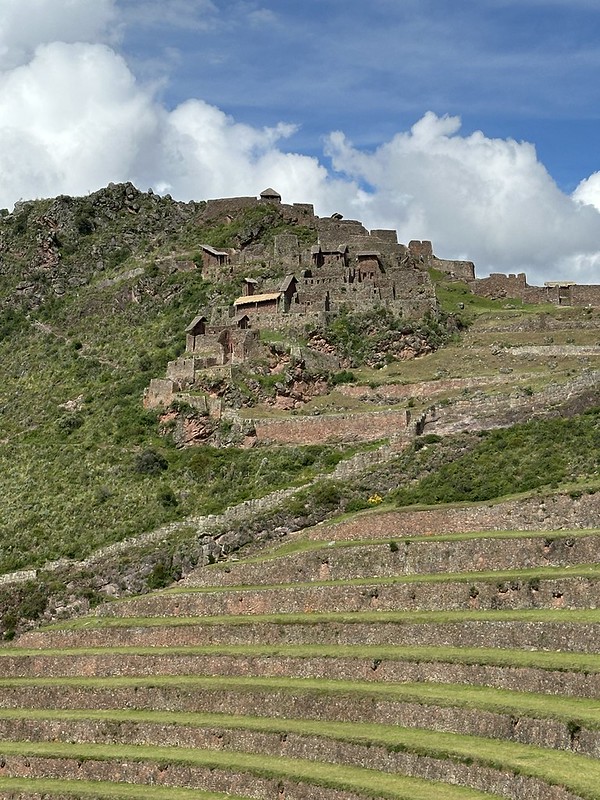
Incas used materials like granite for terrace farm retaining walls because of their heat retention: They absorbed sunlight during the day and then radiated the heat out overnight, allowing the Incas to propagate crops that would not normally have survived the mountain climate. The remains of these terraces are still visible all over the mountains of the Sacred Valley, and some of them have been maintained and are still in use.

Inca cooking:
For dishes like Pachamanca, Andeans use a granite pit and stones for its heat resistance and retention. They put marinated meats and vegetables in the pit with heated stones, and then cover it with wet leaves, a tarp, and soil to retain the food’s moisture. The set up functions like a pressure cooker.
Llama transportation:
Llamas were the primary pack animal for Peruvians before the Spanish conquest, though today mules are more commonly used. The widespread use of mules is harder on trails and grasses, whereas llamas are a native species, have a lighter footprint on the ecosystem, and are more economical.

Recommendations for Future Travelers:
- Do not forget to apply sunscreen under the equatorial sun
- Do not eat airport Popeyes before a stormy turbulent flight
- Do not forget to bring anti-diarrhea medicine
- Do wander the cities and towns
- Do try new foods
- Do be present in the moment
Closing Thoughts:
I’ve been having trouble putting my experience in to words, so hopefully my media can convey it. The unique, immersive experience of this trip and the bonds formed during it will make this trip one of the highlights of college for me.